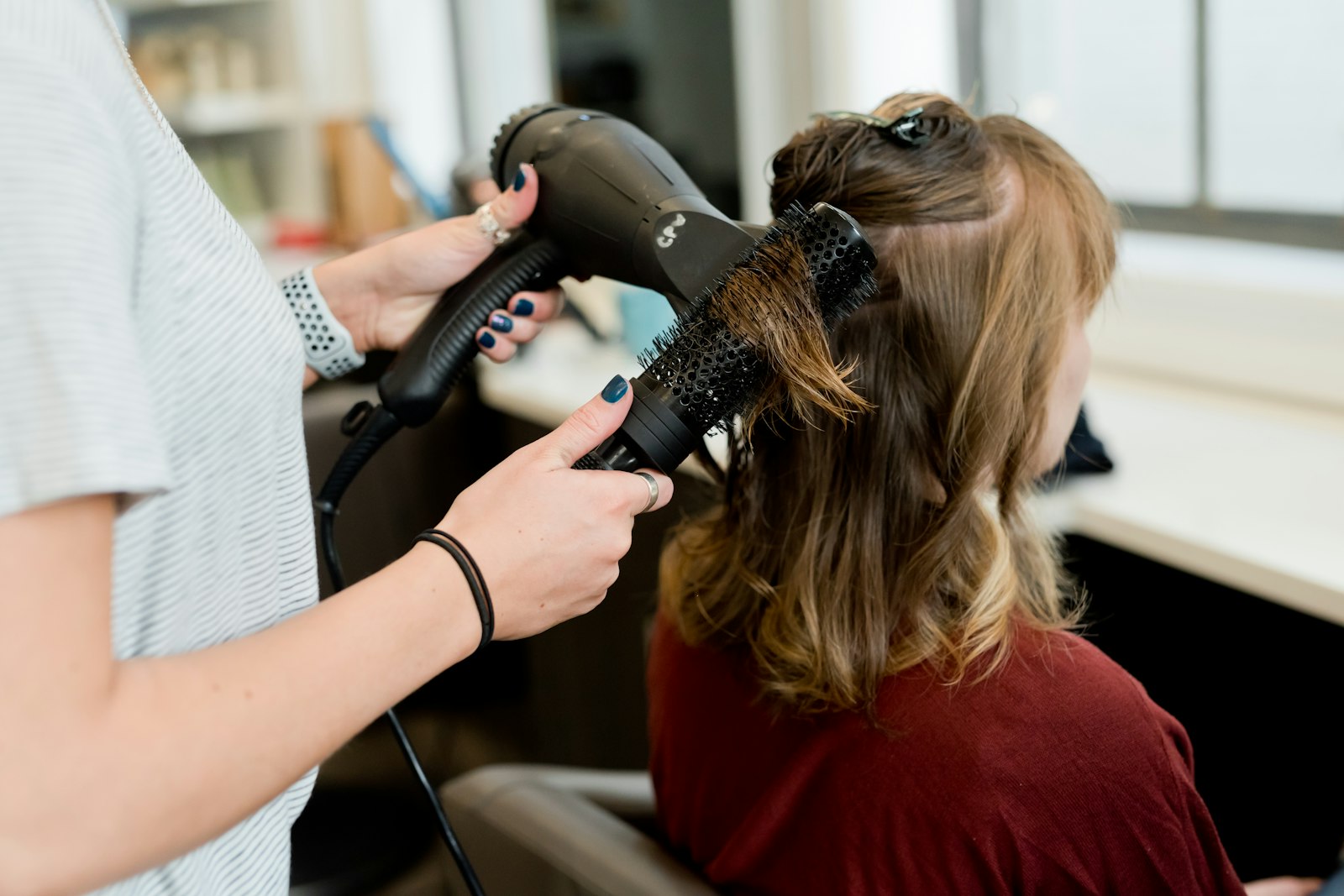
Heat tools are handy, but high temperatures and daily use take their toll. Small changes make a real difference.
Quick look
- Use the lowest heat setting that still gives you the style you want.
- Apply a heat-protecting product before using hot tools.
- Use straighteners only on dry hair; the AAD suggests no more often than every other day.
- Let hair air-dry partly before blow-drying to cut down time under heat.
Straighteners, curling tongs and hair dryers make styling quicker, but frequent high heat can leave hair dry, frizzy and prone to breakage.
Turn the heat down
The American Academy of Dermatology (AAD) recommends low or medium heat settings and a product that protects your hair from the heat. Thick or coarse hair may need a little more heat, so use the lowest setting that still gives you the style you want.
Tool by tool
| Tool | Gentler habits |
|---|---|
| Hair dryer | Let hair air-dry partly first; keep the dryer moving; use a lower heat setting |
| Straighteners | Use only on dry hair, on low or medium heat, no more often than every other day |
| Curling tongs or wands | Work in small sections, and don’t hold the same section for long |
Little trick
Blot your hair with a towel instead of rubbing it. Wet hair is fragile, and rough towelling adds to the damage from heat.
Give your hair a break
Plan heat-free days with styles that work without hot tools, such as loose braids, buns or your natural texture. Our guide to gentle hairstyles explains how to avoid styles that pull.
Look after damaged ends
Regular trims remove split ends before they travel further up the hair. Use conditioner after every wash: the AAD suggests applying it to the ends if your hair is fine or straight, and through the full length if it’s dry or curly. Our guide to how often to wash your hair has more on everyday care.
Good to note
Hot tools can cause burns. Keep them away from your scalp, ears and neck, switch them off after use and let them cool on a heat-resistant surface. Cool a burn under cool running water for 20 minutes, and get medical help for a serious burn.
A gentler routine
You don’t have to give up heat styling. Turning the temperature down, protecting your hair and styling a little less often will keep it in better condition.
Ask away
Is air-drying always better?
Air-drying avoids heat, but rubbing wet hair with a towel can cause damage too. Blot gently with a towel or an old cotton T-shirt.
Do heat protectants really work?
Dermatologists recommend using a heat-protecting product along with lower heat settings. It isn’t a shield against very high temperatures, so the setting still matters most.
How can I tell if my hair is heat-damaged?
Signs include split ends, frizz, breakage and hair that feels rough or looks dull. Trimming damaged ends and cutting back on heat both help.
This article is general information, not medical advice. For skin, scalp or allergy concerns, speak to a pharmacist, your GP or a dermatologist. In an emergency, call 999.